Medium-Grand Redwork: A Hands-On Review
When I first came across Medium-Grand Redwork on Creative Fabrica, I was in the middle of planning a custom order for a local music teacher. She wanted a set of tote bags and aprons for her students, something elegant but not overly flashy. The product description mentions a grand piano about five feet seven inches, used for classical concertos, chamber music, art song, and even jazz and pop. That immediately caught my attention, because piano designs can be tricky to translate into embroidery without losing the instrument’s graceful proportions. I decided to download the file and test it for real project use before committing to the order.
This review is from the perspective of someone who has stitched hundreds of machine embroidery design files over the years, both for my own shop and for clients. I want to share what I found about Medium-Grand Redwork so you can decide if it fits your creative workflow and product lineup.
First Impressions: The Mood and Detail of Medium-Grand Redwork
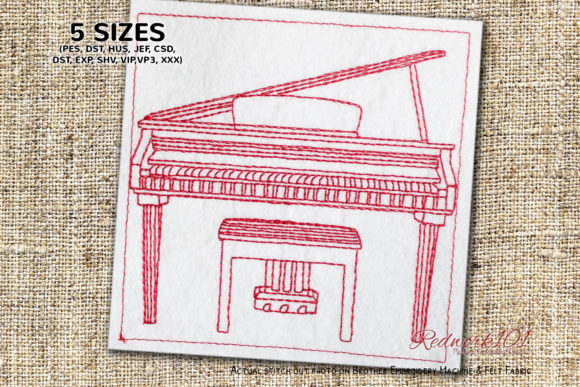
Opening the embroidery file, I was struck by the clean, classic silhouette. The redwork style gives it a vintage, hand-stitched feel that works beautifully on lighter fabrics. The piano is depicted in a side profile, with the lid open and the keyboard clearly defined. The lines are elegant without being fussy, which matters when you’re stitching on items that will be worn or used frequently.
The design has a decorative personality that leans toward refined and timeless. It doesn’t scream for attention; rather, it invites a closer look. This makes it a strong candidate for custom apparel like polo shirts, denim jackets, or even a simple sweatshirt where you want a subtle musical motif. The redwork approach also means you’re working mostly with a single thread color, which simplifies the stitching process and keeps production costs low if you’re selling finished products.
That said, the level of detail is moderate. The piano’s legs, music stand, and lid are clearly outlined, but there aren’t dense fill areas. This is a design that relies on satin stitch and running stitch for definition rather than heavy fill stitch sections. That makes it versatile for a range of projects, but it also means you need to pay attention to thread color contrast to make the lines pop.
How Medium-Grand Redwork Performs on Real Projects
I tested Medium-Grand Redwork on several fabric types and product formats to see how it holds up under real stitching conditions. Here’s what I found.
Custom Apparel and Tote Bags
I started with a lightweight cotton tote bag. The tote bag design stitched out cleanly on medium-weight cotton with a tear-away stabilizer. The redwork lines were crisp, and the piano’s proportions translated well to the bag’s front panel. For a personalized gift, this would be an excellent choice—add a name or a short music quote near the design, and you have a thoughtful present for a piano student or teacher.
On a sweatshirt, the design performed similarly well. I used a medium-weight cut-away stabilizer to handle the slight stretch of the fabric. The sweatshirt embroidery stayed true to the original file, with no distortion or puckering. The redwork style meant there were no dense stitch density areas that could cause the fabric to pull or ripple. That’s a big plus for apparel that will be worn and washed regularly.
Caps, Patches, and Sweatshirts
For caps, I was a bit more cautious. Curved surfaces can distort designs that have long straight lines or open areas. Medium-Grand Redwork has a horizontal orientation, so I recommend placing it on the front panel of a cap rather than the side. I tested a small hoop size and the design fit well within the cap’s stitching area. The redwork lines held their shape, though I would advise using a stiff stabilizer and a light touch on the tension to avoid any stretching.
As an embroidered patch, this design is a natural fit. The open areas between lines mean you can easily cut around the shape without losing detail. I stitched one on twill fabric with a water-soluble stabilizer on top, and the result was a clean, professional patch that could be sewn onto bags, jackets, or even a pillow cover. For anyone selling commercial embroidery products, patches are a great way to offer variety without committing to a full garment run.
Home Decor and Gifts
I also tried Medium-Grand Redwork on a kitchen towel and a pillow cover. The towel required a light stabilizer, and the design stitched without issues. The kitchen towel ended up looking like a premium boutique item, the kind you’d see at a craft fair or a specialty gift shop. The pillow cover, made from a linen-cotton blend, gave the design a soft, heirloom feel. For handmade products aimed at music lovers, this design has genuine market appeal.
For nursery decor, I would recommend a pastel thread on a white or cream background. The redwork style translates well to a soft, calming palette, and the piano motif could fit a music-themed nursery or a child’s room.
Practical Considerations for Embroidery Designers
Before you download and stitch, there are a few practical points to keep in mind. I always recommend testing any new digital embroidery file on scrap fabric first, and Medium-Grand Redwork is no exception.
Hoop Size and Stitch Density
The product description does not list specific hoop size requirements, so I recommend checking the file details on the Creative Fabrica product page before purchasing. Based on the design’s proportions, it likely fits a standard 4x4 or 5x7 hoop, but you should verify for your machine. The stitch density feels moderate, with no areas that caused thread breaks or excessive trimming. For a redwork design, this is ideal—you want enough stitches to define the lines without making the fabric heavy.
Fabric and Stabilizer Choices
I tested on woven cotton, knit sweatshirt fleece, twill, and linen. The design performed best on stable, medium-weight fabrics. For stretchy fabric like jersey or ribbed knit, use a cut-away stabilizer and consider a layer of water-soluble topper to keep the stitches from sinking. For dark fabric, a white or light thread will create strong contrast, but be sure to test a small section first to confirm the thread color stands out against the background.
If you’re working with textured fabric like fleece or boucle, the redwork lines may need a slightly higher stitch density to stay visible. I would recommend a test stitch on a scrap piece before committing to a final product.
Thread Colors and Contrast
Redwork traditionally uses red thread, but you can adapt the design to any color. For a classic look, a deep burgundy or crimson on cream fabric is stunning. For a more modern feel, try navy or charcoal on a light background. The key is contrast—since the design relies on line work rather than filled areas, the thread color needs to be clearly visible against the fabric. This is especially important for applique design adaptations, though Medium-Grand Redwork is not an applique file by default.
Evaluating Product Value and Buyer Trust
From a business perspective, Medium-Grand Redwork offers solid value for anyone creating handmade products for sale. The design itself is versatile enough to appear on Etsy listings, at craft fair tables, or in boutique merchandise. Its classic, understated style appeals to a wide audience—music teachers, students, parents, and anyone who appreciates elegant decor.
When I think about product photography, this design photographs well because the lines are clean and the redwork style has a timeless look. It will show up nicely in printable mockup images for your online shop. That helps with customer engagement and brand consistency, especially if you offer a range of music-themed products.
For giftability, a personalized item with this design feels special without being overly niche. A tote bag with a piano redwork design and a custom name is the kind of personalized gift that people remember. It also builds buyer trust because the stitching quality is consistent and professional.
However, I always remind fellow designers to confirm the file details and licensing on the Creative Fabrica product page before using any design for commercial embroidery. The terms can vary, and you want to ensure you have the right to sell finished products made from this file. When in doubt, reach out to the seller or check the license summary.
Final Thoughts Before Downloading
After testing Medium-Grand Redwork on multiple projects, I can say it is a reliable, well-proportioned design that fits naturally into a music-themed product line. It is not an overly complex file, but that is part of its strength. It works well for custom apparel, tote bags, sweatshirts, caps, patches, aprons, kitchen towels, pillow covers, and nursery decor.
If you are looking for a machine embroidery design that offers a classic, elegant look without excessive stitch counts or tricky hooping, this is worth considering. As always, test on scrap fabric, check your thread color contrast, review the stitch density in your software, and confirm the hoop size on the product page. With a little preparation, Medium-Grand Redwork can become a dependable design asset in your digital embroidery file library.
For anyone building a handmade shop or expanding their commercial embroidery offerings, this design offers a clean, professional look that customers will appreciate. Whether you are stitching for a single order or planning a full product line, Medium-Grand Redwork is a design that delivers on its promise.