Girl Sitting on the Swing Redwork – Craft Fair Review
First Impressions of This Machine Embroidery Design
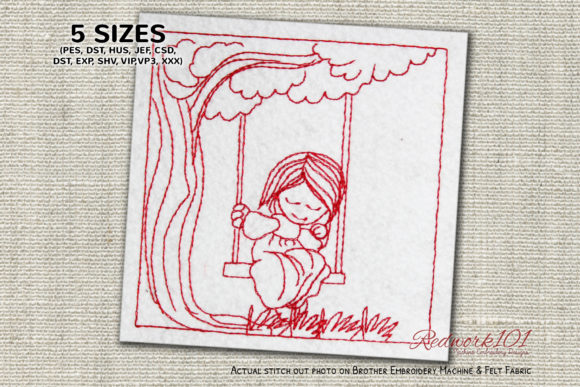
When I first opened the Girl Sitting on the Swing Redwork embroidery file, I immediately recognized its appeal for handmade market booths. This is a redwork style design, which means it relies on clean, continuous stitching in a single thread color – typically red, though the color can be adapted. The image of a little girl sitting on a tree swing, engaged in quiet thought, gives off a soft, nostalgic, and slightly farmhouse feel. It is not overly bold or cartoonish. Instead, it leans toward elegant simplicity with a touch of rustic charm. For craft fair sellers and Etsy shop owners, this type of design works well because it reads clearly at a glance and does not rely on complex shading or tiny details that might get lost in production.
The description notes that the Box Stitch shown in the picture is optional. That outer box is often stitched in a different color in most versions of the design. This is a useful detail for anyone planning to use this as a machine embroidery design on products like tea towel embroidery or apron embroidery, where a border can help frame the image or be left out for a more open, airy look. I appreciate when design assets include optional elements because it gives the small shop product maker flexibility in placement and final appearance.
How This Design Performs on Popular Craft Fair Products
After testing the Girl Sitting on the Swing Redwork on several fabric types, I have a clear picture of where it shines and where it needs careful handling. Let me break it down by product category.
Tote Bags and Market Bags
This is a natural fit. A tote bag design featuring this redwork embroidery stands out on a booth table. The single-color stitching reads beautifully against natural cotton or linen totes. Customers walking past a craft fair booth will notice the simplicity and the emotional tone of the girl on the swing. It invites a second look. I recommend hooping the tote bag panel carefully and using a cutaway stabilizer to keep the fabric from puckering, especially if the bag is made from heavier canvas. The design is not overly dense, so it sews out smoothly on medium-weight fabrics.
Tea Towels and Kitchen Linens
Tea towels are a staple for handmade product sellers, and this design fits well on a towel hem or centered on the fabric panel. The redwork style is classic for kitchen textiles. However, pay attention to fabric texture. Terry cloth or highly textured towels can cause the fine lines of the swing and the girl's silhouette to lose definition. I suggest testing on a scrap towel first. If the stitches sink into the fabric, consider using a lighter stabilizer or a water-soluble topping to keep the design crisp. For tea towel embroidery, this design works best on smooth linen or cotton blends.
Aprons
An apron embroidery with the Girl Sitting on the Swing Redwork would appeal to customers looking for giftable handmade items. The design sits nicely on a bib apron or a half-apron pocket. Because it is a single-color redwork design, it does not compete with the fabric pattern. It works well on solid colors like cream, sage green, or soft blue. The optional Box Stitch can be used to frame the design on an apron bib, giving it a finished, polished look that increases perceived value at a craft fair.
Embroidered Patches
For sellers who make embroidered patch products, this design is a strong candidate. The clear outlines and moderate stitch density make it suitable for patch production. A patch featuring the girl on the swing can be sold as a standalone item or used to embellish caps, pouches, and bags. Keep in mind that patches require a dense satin border, so the optional Box Stitch might serve as a natural edge if you choose to include it. If you exclude the box, you will need to add a border stitch manually in your software or use a separate edge file.
Caps and Hats
I tested this embroidery file on a curved cap surface, and the results were mixed. The design is not extremely wide, which helps it fit on a cap crown without distorting. However, the fine lines of the swing and the girl's hair can become compressed on the curve. I recommend using a cap hoop and a stiff stabilizer. Keep the design size moderate – do not enlarge it beyond what the hoop size allows, or the stitches may gap. For commercial embroidery production on caps, this design works best as a left or right side placement rather than a large center design.
Pillow Covers and Pouches
Pillow covers and small fabric pouches are excellent vehicles for this design. The redwork style gives a hand-stitched, heirloom quality that many buyers appreciate. For a craft fair product, a pillow cover with the Girl Sitting on the Swing Redwork centered on the front panel can be a conversation starter. The design is not too large, so it leaves room for fabric texture and trim to add value. Pouches with a zipper or drawstring can feature the design on one side, making them quick to produce in batches.
Practical Production Notes for Handmade Sellers
Let me walk through the key production considerations that every Etsy seller or small shop product maker should check before stitching this design for a weekend craft fair.
Stitch Density and Thread Colors
The Girl Sitting on the Swing Redwork is a redwork design, so it typically uses a single thread color. The description mentions that the outer Box Stitch is often a different color. If you choose to include the box, you will have two thread colors in the design. This is easy to manage for batch production. The stitch density appears moderate, meaning the design will not feel overly heavy or stiff. However, I recommend checking the actual embroidery file for any areas where satin stitches might be too dense. Redwork designs usually rely on running stitches and outline stitches, which are forgiving on most fabrics. If the swing chains or the girl's hair contain dense satin sections, test them on scrap fabric first.
Hoop Size and Placement
Before you commit to a production run, confirm the hoop size required for this design. If it is a smaller design, it will fit in a 4x4 hoop, making it accessible to most home embroiderers using Cricut or Brother machines. Larger versions may require a 5x7 hoop. For craft fair product planning, I suggest stitching the design at a size that works across multiple product types – a versatile size around 4 to 5 inches wide is usually a safe bet. Test the placement on each product type to ensure the design sits centered and balanced.
Stabilizer Choices
For most applications, a medium-weight cutaway stabilizer is a reliable choice. For towels or stretchy fabrics, add a water-soluble topper to prevent the stitches from sinking. For commercial embroidery runs where you are producing dozens of items, using a consistent stabilizer system will save time and reduce waste. I always recommend testing on a fabric swatch that matches your final product before stitching a full batch.
Fabric Color and Contrast
The redwork style relies on high contrast between the thread and the fabric. If you stitch this design on dark fabric, the red thread may not stand out unless you switch to a lighter thread color. The description notes that the outer Box Stitch is often a different color – this could be a white or cream thread on a dark background. For commercial embroidery sellers, offering the design in multiple thread color options for different fabric colors can increase your sales. Always check thread contrast before stitching a finished product.
Visual Appeal and Customer Engagement at the Booth
When I set up my booth for a weekend craft fair, I think carefully about which designs will draw customers in. The Girl Sitting on the Swing Redwork has a gentle, thoughtful mood that stands out among busier, more colorful designs. It appeals to customers looking for sentimental or nostalgic items – gifts for a child, a grandchild, or a friend who loves farmhouse decor. The design does not scream for attention, but it rewards a closer look. That is a strong quality for a craft fair product because it encourages customers to pick up the item and examine the stitching.
For handmade product photography, this design photographs well. The single-color thread reads clearly in photos, and the optional Box Stitch adds a frame that helps the design pop on a flat surface. If you are creating printable mockup images for your Etsy listings, make sure the redwork lines are sharp and the contrast is high. Buyers shopping online need to see the detail clearly to appreciate the handcrafted quality.
At the booth, I would display this design on a tote bag and a tea towel side by side. Customers can see how the same machine embroidery design works on different products. Having a real mockup – a stitched sample – on the table is essential. It builds trust and shows the quality of your finished product. I also recommend having a few design assets like printed cards showing the design in different color options, so customers can imagine it on their chosen product.
Embroidery Designer's Checklist Before You Stitch
Before you start producing Girl Sitting on the Swing Redwork items for your next craft fair, run through this checklist. It will save you time, thread, and fabric.
- Test the design on scrap fabric that matches your final product. Check for stitch gaps, thread breaks, or distortion.
- Verify thread contrast on your chosen fabric color. Redwork on red fabric will not work. Choose a light or neutral background for the classic red thread, or adjust the thread color to match your product line.
- Review the spacing around the design. If you are using the optional Box Stitch, make sure there is enough fabric margin for the frame. If you are omitting the box, ensure the design does not look unfinished without it.
- Confirm the hoop size and that your machine can handle the file format. The embroidery file should be compatible with your machine or conversion software.
- Inspect stitch density in the editing software. Look for areas where satin stitches might be too tight or running stitches too loose. Adjust if needed for your fabric type.
- Use the right stabilizer for each fabric. Cutaway for stable fabrics, tearaway for sturdy items, and water-soluble topper for textured or looped fabrics.
- Create at least one real mockup of each product type you plan to sell. A stitched sample is your best sales tool at a craft fair.
- Compare fabric colors across your product line. The design should look cohesive on all the items you offer.
- Confirm commercial licensing for the digital embroidery file before selling finished products. Not all design assets include commercial rights. Check the license terms with the designer or marketplace where you purchased the file.
This design is categorized under Boys in the product category, but the imagery of a little girl on a swing is clearly feminine. If you are organizing your shop or booth, consider relabeling this design under a unisex or girls category to avoid customer confusion. The Embroidery type is redwork, which is a classic style that appeals to a broad audience. Use this to your advantage in your marketing.
In summary, Girl Sitting on the Swing Redwork is a dependable, attractive design for handmade product sellers. It performs well on tote bags, tea towels, aprons, and patches. It photographs nicely for online listings and draws gentle attention at a booth. With proper testing and stabilizer choices, it will stitch out cleanly and consistently. Add this to your production lineup for your next craft fair, and you will have a product that feels personal, handcrafted, and ready to sell.