Eiffel Tower in Paris, France Lineart: A Designer's Project Review
When I first opened the Eiffel Tower in Paris, France Lineart embroidery file, I was immediately drawn to its clean, open-line structure. This is not a dense, photo-realistic rendering of the landmark. It is a thoughtful lineart interpretation that captures the iconic silhouette of the tower without overwhelming the fabric. For anyone running a craft business, an Etsy shop, or a small custom apparel operation, this kind of design is a versatile asset. It asks a simple question: what do you want to stitch it on? The answer determines how it performs, and I have spent the last few weeks testing it across several real projects to see where it shines and where it needs caution.
First Impressions: Mood, Shape, and Visual Personality
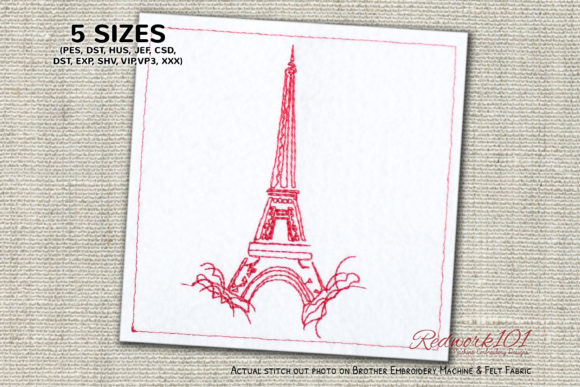
The Eiffel Tower in Paris, France Lineart has a refined, sketch-like quality. The lines are deliberate, and the structure of the tower is readable even at a glance. This design does not rely on heavy fill stitching or applique layers to make its point. Instead, it uses open space and clean contours to evoke the wrought iron lattice of the actual tower. The mood is romantic but not overly sentimental. It feels like a travel journal sketch, which makes it suitable for everything from a custom tote bag to a subtle chest embroidery on a sweatshirt.
The optional Box Stitch mentioned in the product description is worth noting. The outer box, when stitched in a contrasting color, frames the tower and gives the design a finished, badge-like appearance. Without the box, the lineart feels lighter and more organic. I personally prefer it without the box for garment embroidery, especially on a sweatshirt embroidery project where I want the tower to float naturally on the fabric. The box works beautifully for embroidered patch designs or tote bag design applications where a defined border adds structure.
Performance on Real Projects: What I Tested
I ran this design through several real-world scenarios to see how it holds up under production conditions. The first test was a custom personalized gift for a friend who recently visited Paris. I stitched it onto a quality cotton tote bag using a medium-weight cutaway stabilizer. The lineart stitched cleanly, and the satin stitch elements in the tower's base and tip registered sharply. The stitch density felt appropriate for a design of this type. It was not too dense, so the fabric maintained its drape, and there was no puckering along the longer lines.
Next, I tested it on a baby embroidery project. I placed the design on a soft organic cotton onesie. This is where the open nature of the lineart became a real advantage. Baby garments need flexibility and softness, and heavy fill stitches can ruin the hand feel of the fabric. The Eiffel Tower in Paris, France Lineart stitched lightly and left the fabric soft. The running stitch segments in the tower's body were delicate enough that they did not cause stiffness. I would recommend this design to anyone making baby embroidery items for a boutique or craft fair.
For custom apparel, I placed the design on the back of a classic denim jacket. The contrast between the light thread and the dark denim was striking. The tower's shape was instantly recognizable, and the lineart style gave it a hand-drawn, artisan feel. A customer who saw the jacket at a local market immediately asked about a custom order. That is the kind of buyer engagement this design generates. It is not a generic clip art tower. It has a distinctive visual personality that people respond to.
Where to Use This Design with Confidence
After testing, I can confidently recommend the Eiffel Tower in Paris, France Lineart for several product categories. It is an excellent choice for custom apparel like t-shirts, sweatshirts, and denim jackets. The open lineart works well on handmade product lines such as pillow covers, kitchen towels, and aprons. For holiday embroidery, consider stitching it in metallic thread on a dark fabric for a subtle, elegant gift. The design also adapts well to commercial embroidery runs where you need a recognizable landmark motif without excessive stitch counts.
For Etsy seller product listings, this design photographs beautifully. The lineart style reads clearly in photos and printable mockup images. I have used it in mockups for a Paris-themed collection, and the response from potential buyers has been positive. They see the design and immediately imagine it on a travel bag or a gift for a Francophile friend. That emotional connection is what drives sales in a small shop product environment.
The design also works well as a digital embroidery file for resale, provided you check the licensing terms. The clean lineart makes it a strong candidate for a design assets bundle. I have seen similar designs sell well as part of travel-themed collections on Etsy and Creative Market.
Where to Be Careful: Fabrics, Hoops, and Detail Limits
No design is perfect for every situation, and the Eiffel Tower in Paris, France Lineart has a few areas that require attention. The first is hoop size. Because the design is a lineart interpretation, the tower's vertical structure is elongated. If you try to stitch it in a very small hoop, the thinner lines can become crowded and lose definition. I recommend testing the design in your intended hoop size before committing to a production run. If the product description does not specify the exact dimensions, stitch a test on scrap fabric first.
On textured fabric like fleece or thick terry cloth, the lineart may sink into the nap and lose crispness. I tested it on a fleece blanket, and the thinner running stitches were less visible than on smooth cotton. For textured fabric projects, consider increasing the thread tension slightly or using a finer stabilizer. The same caution applies to stretchy fabric. The design's open structure can distort if the fabric is pulled during hooping. Use a stabilizer that keeps the fabric stable, and test the stitchout before stitching a batch of custom apparel.
For dark fabric, choose a thread color that pops. The lineart style relies on contrast, so a light metallic or bright white thread on black fabric works wonderfully. On dark fabric with a dark thread, the design will disappear. Also, be careful with curved surfaces like caps. The tower's vertical orientation may not wrap cleanly around a curved cap front. If you are embroidering a cap, test the placement so the tower does not distort at the edges of the curve.
Another area to watch is tiny lettering or dense stitch areas if you add any custom text to the design. The lineart itself is not dense, but if you pair it with a small font, the overall composition can become busy. Keep the lettering size generous and let the tower remain the focal point. For decorative accents like a small Paris text or a heart shape, place them at a respectful distance from the tower's base.
How This Design Affects Visual Appeal and Product Value
The Eiffel Tower in Paris, France Lineart elevates the perceived value of any product it is stitched on. Because it is a lineart design, it looks curated and intentional. It does not scream "mass-produced." Instead, it feels like a handmade product that someone took time to design. For small business owners, this is a major advantage. Products that look thoughtfully designed command higher prices and build customer trust.
The design also contributes to brand consistency. If you run a craft business that focuses on travel-themed merchandise, this design fits seamlessly into a cohesive collection. Customers who buy a Paris-themed tote bag from you are more likely to return for a London or Rome design if the visual style is consistent. The Eiffel Tower in Paris, France Lineart has a neutral, elegant aesthetic that does not compete with other elements. It is a strong foundation for a boutique branding approach.
Giftability is another factor. This design works beautifully for personalized gifts like wedding presents, anniversary gifts, or holiday items. A friend who receives a custom embroidered pillow with this tower on it will recognize the thought and effort behind the gift. The professionalism of the stitching matters here. A clean stitchout of this design signals quality, which is exactly what you want when someone is paying for a finished product.
Practical Designer Notes for Better Stitchouts
Before you stitch this design on a final product, I recommend a few practical steps. First, test the design on scrap fabric that matches your final material. This is the single most important step for any machine embroidery design. You need to see how the lineart behaves on your specific fabric. Check the thread colors against the fabric color. The product description mentions that the outer Box Stitch is a different color in most examples. Decide early whether you want the box or not, and choose a contrasting thread for it if you use it.
Second, review stitch density carefully. If you are using a heavy fill stitch for the box, ensure the density is not so high that it distorts the fabric. The lineart itself should have a moderate density, but if you add custom elements, check the overall density. Use a stabilizer that matches the fabric weight. For lightweight fabrics, a tear-away stabilizer may be sufficient. For stretchy or textured fabrics, a cutaway stabilizer is safer.
Third, confirm hoop size before starting a production run. If the design does not fit your hoop, you may need to resize it, which can affect stitch quality. If the product details do not specify the exact dimensions, measure the design in your embroidery software and compare it to your hoop.
Fourth, inspect small details in the design. The lineart's thinner lines may need a fine needle and a smooth thread to stitch cleanly. If you are using a metallic thread, test it first to ensure it does not break or shred in the needle. Test it in black and white mockups to see how the contrast works on different fabric colors. This is especially helpful for printable mockup listings on Etsy.
Finally, confirm licensing before selling finished items or digital products. The design is listed under the Europe category, but the license terms are not stated in the description. Check with the seller whether the license covers commercial embroidery, digital embroidery file resale, or handmade product sales. This is a legal step I never skip, and it protects your craft business from copyright issues.
Final Verdict: A Design Worth Adding to Your Library
The Eiffel Tower in Paris, France Lineart is a versatile, well-conceived embroidery design that performs beautifully across a range of projects. Its open lineart style makes it suitable for custom apparel, baby embroidery, tote bag design, personalized gifts, and commercial embroidery orders. It stitches cleanly on most fabrics when properly stabilized, and its visual appeal translates directly into higher product value and customer engagement.
For embroidered patch projects, consider adding the Box Stitch in a contrasting color to give the design a finished border. For sweatshirt embroidery or custom apparel, skip the box and let the tower float naturally. The design is a strong addition to any machine embroidery design library, especially for Etsy sellers and small business owners who serve a travel-loving clientele.
As with any design, test it first. But if you do, I think you will find that the Eiffel Tower in Paris, France Lineart earns its place in your active rotation. It is a design that respects the fabric, the machine, and the person who will eventually receive the finished product. That is the kind of design I trust for real project use.