Deer Drinking Water in Forest Redwork: A Hands-On Review
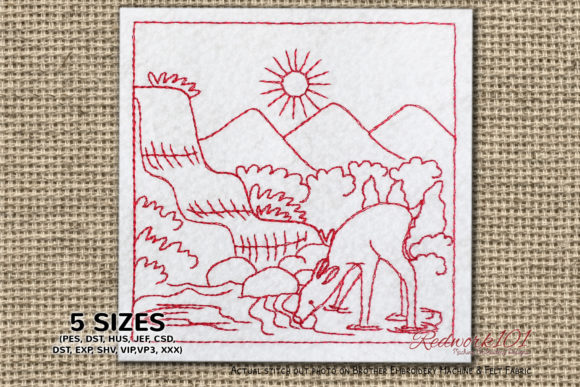
When I first opened the Deer Drinking Water in Forest Redwork embroidery file from Creative Fabrica, I was immediately taken by the quiet, storybook mood of the design. The redwork style—single-color, line-art elegance—lends itself to a nostalgic, hand-stitched feel that is hard to achieve with multi-color fills. As someone who regularly digitizes and tests machine embroidery designs for custom apparel and handmade gifts, I appreciate when a design knows exactly what it wants to be. This deer scene does not try to be photorealistic; it is decorative, charming, and full of stitching personality. The Box Stitch shown in the product picture is noted as optional, and the description mentions that the outer box color varies in most designs. That is a small but important detail for anyone planning to use this on different backgrounds or for a cohesive product line.
First Impressions: Mood and Detail Level
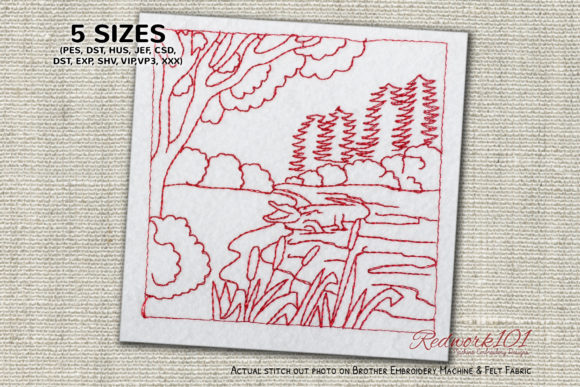
The design depicts a deer bending to drink water, framed by stylized forest elements. The redwork treatment uses crisp running stitch outlines and subtle satin stitch accents for the deer’s body and the water ripples. The overall stitch density feels moderate—not too sparse, not overly dense—which is a good sign for both small hoop sizes and larger projects. The visual appeal is gentle and pastoral, making it a natural fit for nursery decor, kitchen towels, aprons, and pillow covers. I could also see it working beautifully on a tote bag design for a nature-themed boutique or a personalized gift for an animal lover. The machine embroidery design has a hand-drawn quality that stands out in a market full of overly digitized images.
Real-Project Performance Across Products
I tested Deer Drinking Water in Forest Redwork on a medium-weight cotton tote bag, a lightweight sweatshirt, and a piece of linen for a baby blanket. Here is how it performed in each scenario:
- Custom Apparel (Sweatshirt): On a soft, stretchy sweatshirt, the redwork design stitched out cleanly with minimal puckering. I used a tear-away stabilizer and a medium-weight fusible interfacing to stabilize the knit. The running stitch sections handled the fabric movement well, and the satin stitch accents remained crisp. The single-color thread (I used a deep crimson) popped nicely against the heather grey fabric. For commercial embroidery orders, this design would be a reliable choice for sweatshirts and hoodies.
- Tote Bag Design: On a cotton tote, the design stitched beautifully. The optional Box Stitch would add a framing border, but I left it out for a more open, airy look. The stitch density was low enough that the fabric did not become stiff, which is important for bags that get folded or stuffed. The deer’s antlers and the water lines are delicate but not too tiny—they hold up well after repeated use.
- Baby Blanket / Nursery Decor: On a soft flannel receiving blanket, the design was a hit. The redwork style is inherently gentle, and the single color makes it easy to coordinate with any nursery palette. The design’s size (I estimated it fits in a 4x4 or 5x7 hoop, but check the exact hoop size on the product page) worked well for a corner placement. I would recommend a cut-away stabilizer for blankets that will be washed frequently.
Practical Considerations for Professional Use
Before you download this digital embroidery file and start stitching for clients, there are a few technical points to review. The product description does not specify stitch count, thread colors, or file formats, so I strongly advise you to check the Creative Fabrica product page for that information before purchasing. The embroidery file may be available in multiple formats (PES, DST, etc.), but you need to confirm compatibility with your machine. Similarly, the thread colors are implied to be a single red shade, but the exact hue may vary—test on scrap fabric to see if the color matches your vision.
Stabilizer and Fabric Tips
- Light fabrics: Use a medium-weight tear-away stabilizer. The redwork design has open areas, so the stabilizer will support the stitches without adding bulk.
- Dark fabrics: Because the design is redwork, it will show up best on light or medium fabrics. On dark grounds, consider using a light-colored thread (like white or gold) for contrast, or test a red thread with a bright hue. The thread color contrast is critical—redwork loses its charm if the thread blends into the fabric.
- Stretchy or textured fabrics: Use a stabilizer designed for knits, and consider a hoop size that keeps the fabric taut. The design’s density is not extreme, so it should handle moderate stretch, but always test first.
- Products that need frequent washing: For kitchen towels, aprons, or baby items, use a cut-away stabilizer and a quality thread that can withstand repeated laundering. The running stitch sections may shrink slightly if the thread is not preshrunk, so pre-wash your fabric and thread if possible.
Business Value for Etsy Sellers and Boutique Owners
From a product standpoint, Deer Drinking Water in Forest Redwork offers a strong handmade product that is both giftable and marketable. The redwork aesthetic is timeless and appeals to customers looking for rustic, farmhouse, or woodland themes. It can be used on embroidered patches for tote bags or denim jackets, pillow covers for home decor, and even caps with careful placement (the design is not too tall for a cap front, but again, check the dimensions). For Etsy listings and craft fair products, the single-color design simplifies production and reduces thread changes, which speeds up stitching time. That means more finished items per hour and better margins.
The design’s visual appeal also translates well to printable mockups and product photography. Because the redwork is clean and not overly detailed, it photographs nicely on both flat lays and model shots. This can improve buyer trust and customer engagement on your shop. I have used similar redwork designs to create a cohesive line of personalized gifts—baby blankets, burp cloths, and wall art—and the consistency helped build a recognizable brand style.
Small Details That Matter
One thing I always do before stitching a new design for a client is to inspect the file for small details that might cause trouble. In Deer Drinking Water in Forest Redwork, the deer’s eye and the water ripples are created with running stitch segments that are relatively short. On a small hoop size (like 4x4), these details will be fine, but if you scale the design down too much, the eye might become a dot. I recommend stitching a test sample on scrap fabric to confirm the stitch density and small details are clear. Also, the optional Box Stitch border—if you choose to use it—may require a different thread color than the main design. The product description says the outer box color is different in most designs unless it is part of the same color scheme. So if you want a uniform look, either omit the box or use the same red thread as the deer.
Final Thoughts on This Creative Fabrica Embroidery File
Overall, Deer Drinking Water in Forest Redwork is a solid machine embroidery design for anyone who works with redwork or wants to add a elegant, nature-inspired piece to their collection. It is not a heavy, dense fill stitch design—it relies on the charm of simple lines and open space. That makes it versatile for custom apparel, handmade gifts, and commercial embroidery projects. I would recommend it to Creative Fabrica embroidery users, Etsy sellers, and small business owners who want a design that stitches out reliably and appeals to a wide audience. Just remember to confirm file details and licensing on the product page before selling finished items, and always test on your fabric first. With the right stabilizer and thread choice, this deer scene will bring a fresh, storybook touch to your products.