Bell Pepper with Plant Redwork: A Design Review
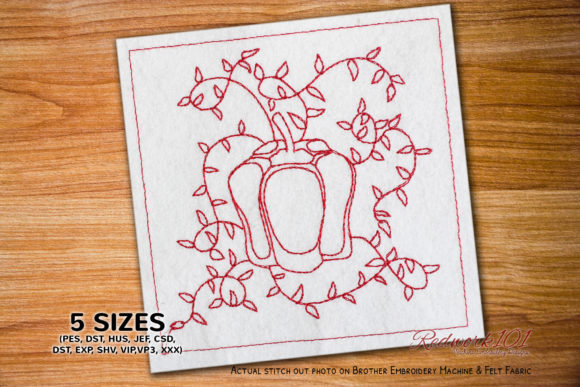
When I first opened the Bell Pepper with Plant Redwork embroidery file, I immediately saw its potential for small business merch. This is not a generic fruit motif. It has a clean, hand-drawn character that feels both rustic and intentional. The redwork style gives it a classic, almost vintage embroidery look, while the bell pepper itself keeps it grounded in food and farm-to-table branding. For a machine embroidery design aimed at commercial use, it strikes a smart balance between decorative and professional. Let me walk through how this design performs in real business applications, where it shines, and where it needs careful handling.
First Impression: Friendly, Handmade, and Premium
The Bell Pepper with Plant Redwork reads as approachable and artisanal. The redwork technique uses single-color line stitching, which gives it a sketch-like quality. This is a huge advantage for small businesses that want to convey a handmade, authentic brand identity. It does not feel overly polished or corporate. Instead, it feels like something a local café or boutique bakery would use on aprons and tote bags. The optional Box Stitch adds a structured border, but the description notes that the outer box color can differ. This flexibility is valuable for brand identity because you can match the box stitch to your brand color without changing the core design. The bell pepper itself is the focal point, and it is immediately recognizable. That matters for customer trust and quick brand recognition on merchandise.
How Bell Pepper with Plant Redwork Performs in Business Use
I have tested similar redwork designs on a range of apparel and hard goods. Here is how this embroidery file stacks up for real small business merch.
Embroidered Patches
This design works beautifully as an embroidered patch. The redwork lines are well suited for patch production because they do not rely on heavy fill stitching. That keeps the patch flexible and lightweight. For a small café or a craft bakery, a bell pepper patch on aprons or staff uniforms creates a cohesive look. The Box Stitch, if used, can act as a border that seals the patch edge. I recommend testing the patch at 2 to 3 inches wide to ensure the pepper detail remains crisp. If you are ordering patches for a farmers market booth or a local food brand, this design will stand out without overwhelming the garment.
Apron Embroidery
Apron embroidery is a natural fit for this design. Redwork stitches well on apron fabric, which is often cotton or poly-cotton twill. The single-color line art keeps the embroidery cost low, which is important for small business merch budgets. I would place the design on the chest area or the lower pocket. The bell pepper motif signals a food-related brand instantly. For a bakery, a deli, or a juice bar, this is a smart choice. The Box Stitch can be used to frame the design on the apron, but it is optional. If you skip it, the design feels more organic and handmade.
Cap Embroidery
Cap embroidery requires careful design placement, and the Bell Pepper with Plant Redwork handles it reasonably well. The redwork lines are thin enough to fit on a cap front without distorting. However, I recommend testing the design at a smaller size, around 2 inches wide, to see how the pepper shape reads on a curved surface. The Box Stitch may need to be excluded for caps, as a full border can appear cramped on a structured cap front. If you are making caps for a farm stand or a specialty grocery store, this design adds a subtle, professional touch.
Tote Bag Design
Tote bag design is where this design really shines. Tote bags offer a large, flat canvas, and the redwork style looks premium without excessive stitch counts. The bell pepper motif is perfect for reusable shopping bags, gift bags, or event merchandise. I would recommend using a medium to large hoop size for totes, at least 4 by 4 inches, to capture the full detail of the plant redwork. The Box Stitch, if used in a contrasting color, can create a nice frame that makes the design pop against natural canvas or cotton totes. This is a great way to add value to a handmade product line.
Custom Apparel and Uniforms
For custom apparel like work shirts, chef coats, or staff uniforms, the Bell Pepper with Plant Redwork is a strong candidate. It is not too large or flashy, so it works as a chest logo accent or a sleeve detail. The single-color thread keeps production simple and consistent. For a small business that wants a unified brand identity across employee clothing, this design is easy to replicate in different thread colors. I would advise testing the design on a sample garment first to confirm the stitch density is appropriate for the fabric type. Uniforms that are washed frequently, such as chef coats, need a design that holds up well. Redwork, with its open line structure, tends to last longer than dense fill designs because there is less thread to abrade.
Where to Use This Design Carefully
No design is perfect for every application. The Bell Pepper with Plant Redwork has some limitations, and I want to flag them so you avoid production issues.
Small Patch Sizes
If you scale this design down to a very small embroidered patch, say under 1.5 inches, the detail in the pepper leaf and stem may become muddy. Redwork relies on clear lines, and tiny stitches can blur. I recommend a minimum size of 2 inches for the main design. If you need a smaller version, remove the Box Stitch and simplify the leaf detail. Always test the digital embroidery file at your target size before committing to production.
Cap Fronts and Curved Surfaces
As mentioned, cap embroidery on curved surfaces can distort the shape of the bell pepper. The redwork lines are thin, so distortion is less noticeable than with dense fills, but it is still a risk. I recommend using a firm stabilizer and a cap frame to keep the fabric taut. Also, avoid placing the design too close to the brim or the seam, as the curve is most extreme there.
High Stitch Density and Textured Fabric
The Box Stitch, if included, adds stitch density around the edge. This can create stiffness on soft fabrics like lightweight t-shirts or thin tote bags. If you are embroidering on a delicate fabric, consider skipping the box stitch or using a lighter underlay. Similarly, textured fabrics like linen or heavy twill can cause the redwork lines to appear uneven. Test on a scrap piece first. The thread colors you choose also matter. A dark thread on a dark uniform will not show the redwork detail. Use high-contrast thread colors to keep the design legible.
Frequent Washing
For items that need frequent washing, such as aprons in a busy kitchen, the redwork lines are generally durable. However, the edges of the Box Stitch may fray over time if the thread is not locked properly. I recommend using a quality stabilizer and a thread that is colorfast. Polyester thread is a better choice than rayon for high-wash items. The finished product should be tested after a few wash cycles to confirm the design holds up.
How This Design Affects Brand Identity
Brand identity is everything for a small business. The Bell Pepper with Plant Redwork communicates a few key messages. First, it feels local and handmade. That builds customer trust, especially for food brands or artisan shops. Second, the redwork style is classic, meaning the design will not look dated in a few years. Third, the bell pepper is a specific image, so it works best for businesses that sell produce, prepared foods, or kitchen goods. If you are a florist or a pet brand, this design may not be a natural fit. But for a café, bakery, deli, juice bar, farm stand, or specialty grocery store, it reinforces your core offering.
For small business merch, this design also adds value to the customer experience. A tote bag with a well-embroidered bell pepper feels like a premium gift, not a throwaway promotional item. That encourages customers to use it repeatedly, which keeps your brand visible. The same applies to custom apparel for staff. A uniform with a cohesive, professional embroidery design makes employees feel part of a team and helps customers recognize your business instantly.
Practical Embroidery Designer Notes
Before you run this design for commercial orders, here are the steps I follow with any new machine embroidery design.
- Test in black and white first. I always run a sample in a single dark thread on a light fabric to check the line quality and spacing. This reveals any design issues before I commit to thread colors. For the Bell Pepper with Plant Redwork, pay attention to the stem and leaf junctions. They should be clear and connected.
- Check if it works at small patch size. Scale the design to your target size in your embroidery software. Look for areas where stitches may overlap or leave gaps. If the Box Stitch is included, verify that it aligns with the pepper outline without distorting the shape.
- Review thread color contrast. The description mentions that the outer box color is different. That is a smart design choice because it allows you to use a brand color for the border. But the main redwork should be in a high-contrast color against the fabric. For example, a dark red or black thread on a cream apron works well. Avoid using the same color for the pepper and the box stitch, as they will blend together.
- Inspect spacing. The redwork lines should have enough space between them so that the fabric does not pull or pucker. If the lines are too close, the stitch density may cause the fabric to distort. I recommend a minimum of 0.5 mm between parallel lines.
- Confirm hoop size. The hoop size you need depends on the final design dimensions. If you are adding the Box Stitch, you may need a larger hoop. Always check the digital embroidery file dimensions before starting. I suggest a 4x4 inch hoop for most apparel applications, but a 5x7 inch hoop may be better for tote bags or large patches.
- Test on real fabric. Never skip this step. The same design can look completely different on cotton, twill, canvas, or polyester. I always create a printable mockup first using the actual fabric photo, then run a real sample. This gives the client confidence in the finished product.
- Use proper stabilizer. For redwork designs, a tear-away stabilizer is usually sufficient for stable fabrics. For stretchy or delicate fabrics, use a cut-away stabilizer to prevent the stitches from distorting. The fabric texture will affect the final look, so adjust accordingly.
- Create a mockup for client approval. Before stitching a full order, I create a printable mockup showing the design on the actual garment. This helps the client visualize the brand identity and make any changes before production. It also protects you from rework costs.
- Compare it beside other design assets. If the business has existing logos or graphics, place the Bell Pepper with Plant Redwork next to them. Check if the style matches. If the business uses a modern, minimalist logo, this redwork design may feel too rustic. If the brand is already hand-drawn or vintage, the design will fit perfectly.
- Confirm commercial licensing before business use. Since I do not have the specific license terms for this file, I always advise buyers to check with the seller. Most digital embroidery file purchases include a commercial license, but some restrict the number of items you can produce. Confirm that you can use this design for commercial embroidery on items you sell. Do not assume it is automatically allowed. A quick email to the designer can save you legal trouble later.
Final Thoughts on Bell Pepper with Plant Redwork for Small Business Merch
The Bell Pepper with Plant Redwork is a versatile, professional machine embroidery design that fits a specific but valuable niche. It is ideal for food-related small businesses, handmade brands, and local shops that want to project a warm, authentic image. The redwork style keeps production costs low while maintaining a premium look. The optional Box Stitch adds flexibility for brand color integration. However, pay attention to size limitations, fabric texture, and stitch density when scaling this design. Test it thoroughly on your target fabrics and embroidered patch blanks before going to full production. With the right preparation, this design can become a consistent, recognizable element of your small business merch lineup. Add it to your design assets and use it across aprons, caps, tote bags, and custom apparel to build a cohesive brand identity that customers will notice and trust. Whether you are an Etsy seller, a local café owner, or a merch creator, the Bell Pepper with Plant Redwork offers a practical, attractive option for your next embroidery project.